Showing posts with label BBC. Show all posts

Wednesday, December 28, 2011

Not anemic but not full-blooded either


Technically, Masterpiece Theatre's Dracula (made exclusively to television by BBC in 2006) would have been a miserable failure- it's too short, it glosses over several important factors and it's quite an unusual piece to be released by the normally prestigious production company. However, what ultimately saves it (and us) is that it takes a deliberate step to deviate from the tale with some compelling performances to back it up. In my personal opinion, this may have worked better if this production was a sequel rather than a proclaimed 'faithful' and truncated version of the tale.

Rather than focus on the supernatural elements of the story (which are still there), Dracula turns it into a drama that focuses on the Victorian anxieties of disease, sex, loss and personal shame, and all of these things are compounded by the arrival of Dracula himself. The handsome Arthur Holmwood is about to marry his beloved Lucy Westenra (Sophia Myles), but he is petrified to consumate their marriage due to the fact that he has syphilis. He is desperate to find a way to remedy this and resorts to extreme measures that even he cannot fully understand. Young Mina and newly-appointed solicitor Jonathan Harker have just been married but Jonathan must leave at once for Transylvania to close an important business deal with the elusive Count Dracula, leaving Mina alone and uncertain of what has become of her husband. Doctor John Seward, who has for a long time adored Lucy feels bitter that she chose Arthur to be her husband despite their long term friendship. All of these characters are in an unenviable state that only gets worse upon the arrival of Dracula.

When Bram Stoker wrote his magnum-opus, scandalous and provocative things were known but were never discussed freely. It is this element of fear being like a dark, unknown and forbidden abyss that is personified by Dracula- nobody knows what he is, or where he truly came from. There are theories, and only physical facts but no actual wisdom about him. I don't want to give away an important plot point in the case of this production, but let's just say Van Helsing is not so much an esteemed professor on the matter- he is as much a victim of Dracula as anybody else is. Stoker was very well aware of how his fellow humans felt at the time, and he addressed this by creating a fictional agent to reflect it. 2006 Dracula keenly addresses this, though it never shoves it in your face and rubs it in. The entire production plays out a little like a fever dream- you can certainly feel the sensation of something being wrong, but it is hidden behind a dreamy masque. It would almost be erudite were it not for the fact it never truly reaches the potential.

                                                   Plus the fanfiction kinda writes itself...

Make no mistake, the repressed sexual desire is there, as is an at times, dreamy atmosphere, but these elements don't combine the way they should have. As I said, what saves it from drifting into complete incomprehension are the actors and their approach to their roles.
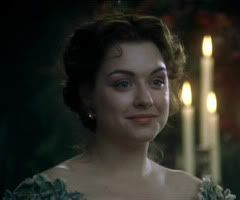
The ever ravishing Sophia Myles, in my mind, makes for a perfect Lucy- charming and likeable but with a highly palpable sensuality that emanates from her even before she becomes fangy. Her chemistry with Stephanie Leonidas (Mina) is very sweet and convincing. You can see why all of the men adore her (which in turn will make you adore her also). By the way, her intimate scene with Dracula is HOT. Stephanie Leonidas keeps Mina real, but at times, she allows hysteria to become her leading emotion when it feels a little forced. But that's just me. Tom Burke is an interesting young actor with a fascinating face and he embodies Seward's personal bitterness as well as his desire to be the best man of medicine he can be. Dan Stevens is incredibly handsome and he makes for a good choice of this version of Arthur Holmwood. He may not be to everybody's tastes, but he takes on the material the best he can. David Suchet is quite a unique Van Helsing. I'll leave that up to you to see for yourself.

                                                     Sophia Myles: Happy now?

So where does this leave Marc Warren? The guy isn't the embodiment of Dracula as we know him, but this version of the Count has been written to be more of an insinuating menace than an overt one. He is also quietly predacious. Warren's stature is not upfront intimidating, but he doesn't try to be, instead, he uses it to his advantage, especially when it comes to his more intense scenes. The man can just stand there and stare at you with his piercing ice blue eyes and you know a world of hurt and Hell will come upon you. He isn't what you'd call traditionally handsome (thank God for that), but like BBC's other Dracula, Louis Jourdan, he is still very sexy in how he carries himself. His forthright nature, his animalistic attributes, his growly, intimate tone, it works beautifully for him because those are his strengths and he plays to them like a champion. He reminds me of a younger and leaner Malcolm McDowall- that's a compliment. The only thing that worked against him was his 'Old Dracula' make up- Warren, despite his angular features still has a youthful look and you can still see that through all the prosthetics and aged make up he wears when we first see him, and the wig, heh, well.

                                                 
All in all, 2006's Dracula still would have worked as a sequel rather than another re-telling- it has a solid bunch of ideas and an awareness of the time period, a competent cast and a dangerous sexuality lurking beneath it, but it never quite delivers because it never knows quite what it can be. I wanted very much to love this version, but all I could do was like it. I'm not saying that is a bad thing in itself, but when you have all of that great material and you don't use it to maximum effect, why bother showing it at all?

                                       Marc Warren- BECAUSE IT'S MY BLOG, DAMN IT.

Monday, December 19, 2011

Respectable AND classy!


Ahhhhh, wasn't the 70's was a massive time for Dracula? Hammer was on it's final journey, Franco was giving it a shot, Frank Langella (dreamy, dreamy Langella) was simultaneously playing the role on stage as well as on film, Herzog and Kinski were teaming up again for 'Nosferatu'... quite a boom. So it goes without saying that the ever trusty and classy BBC decided to launch a Masterpiece Theatre production of Bram Stoker's novel, daring to follow as closely to the book as it possibly can, and despite several discrepancies and some obvious dating, this one is pretty damn solid enough to certainly recommend to anybody who wants to see the tale done better.


While heavily staged in terms of acting and filming, the result is quite well done. Director Phillip Saville took great pains to follow Stoker's prose and tries to keep it all on the level. There is no overt eroticism in the style of Coppola, or maximum theatricality of Lugosi, instead, it is played as realistically as possible while retaining the spirit of not just the story, but of the essence of Dracula himself, this time interpreted by the slinky Louis Jourdan. The entire production saturates you with the prim and proper atmosphere of the Victorian era without going overboard. It's quietly gorgeous.


                                                         This is my Happy Face.


Backed up by the lavish yet at the same time restrained settings is an admirable cast of trained British actors- Judi Bowker as Mina Murray/Harker (Princess Andromeda from the original 'Clash of the Titans'), Frank Finlay as Professor Van Helsing (whose characterization is thematically the closest they get) while Mark Burns as Doctor Seward plays off Finlay admirably. However, honors must be bestowed upon Jack Shephard who plays Renfield- much like Klaus Kinski in Franco's 'Count Dracula' he gives the character a firm grounding in reality- Shephard's Renfield comes off as a sane man fighting for his peace of mind in an insane situation. Granted, there are moments of undisputed craziness, but you truly do feel for this man, and it's even worse because you know what his fate will be. And although every actor is dealt with some clunkers in terms of dialogue, Shephard really is a champion when it comes to delivering exposition about Dracula's hold over him and how he wants to escape but can't.


Other actors however don't fare quite so well- Bosco (Who calls their kid 'Bosco' by the way?) Hogan (Harker) almost immediately comes across as totally unsympathetic, put quite simply, he really is a boob. He seems to only catch on that he and his wife Mina are in serious trouble towards the end of the picture, and by then, the endgame is almost over. Susan Penhaligon isn't awful, but she really had no business playing a character like Lucy- she is far too restrained and she never lets herself go when she becomes Dracula's marionette. It's a shame because Lucy really is an important character because she is not only used as an example of Dracula's power over us mere mortals, but also as a statement of the social anxieties of the time- that being women were frightening when they were permitted access to their sexuality. Thing is, we women are still scary when we aren't driven by our hormones so the joke's on you, Papa Patricarchy! >:-D


Naturally this brings me to Jourdan's portrayal of the Count. When you think of Jourdan, you don't automatically associate him with Dracula, but here, although he may not look the part by pop culture standards, he really does have the spirit of Dracula. He is darkly magnetic, and even though he never raises his voice or a hand to anybody, there is something in his dark, dark eyes that makes you believe that this fellow isn't human. Looks wise,  he may not be a traditionally handsome man by any stretch of the imagination, (I wouldn't say that) but God is he ever sexy. People (of the stupid variety, naturally) think Jourdan is sleep-walking through this role, and that is completely untrue. Sure, Lee was a total animal, and yes, Lugosi is the Classic Count, but Jourdan nails the enigma of Dracula, and let me ask you, when does an enigma call exclusive attention to himself by flourishing his cape or pulling a RapeFace or baring their fangs at every ample opportunity? Jourdan is a silent but precise predator who only strikes when he finds it prudent. 


Right, so what stops me from saying this is the definitive Dracula? For one thing, it is not absolutely faithful- once again, characters are messed with and their relationships are re-arranged. Mina and Lucy are sisters this time, and Lucy no longer has three suitors, instead they are rolled into one, Quincy Morris (who unfortunately is played by a mediocre at best actor) although the character of Doctor Seward still remains and still has feelings for Lucy. Additionally, from an aesthetic point of view, there are some rather... colourful aspects. I know Saville was trying to keep things interesting, but he really did go a little overboard with colour filters and film negatives, even if they were meant to represent Dracula's presence in a scene. To be perfectly blunt, this really does show the date of the film, which in this case, isn't beneficial.


                                                                                Blegh.
Another aspect that works against the overall product is some inappropriate use of music and sound effects. When something mysterious is afoot, you hear this chime like what you hear on a child's storybook tape that signals when you are supposed to turn the cassette over. That comes dangerously close to taking you out of the movie completely, something Saville unfortunately didn't quite catch on to. I can applaud the fact he was willing to be unique in his approach to an oft-filmed story , but there is only so much old school charm we new audiences can take before we ridicule a film. Unless of course you are a nostalgic sort, you may find it endearing, but personally, I felt it was completely unnecessary. 


In saying that however, if you consider yourself above settling for such ultimately petty quarrels, by all means, check this one out. It may not be the complete package, but it stays utterly faithful to the spirit of the story. Owe it to yourself to see a Dracula done the way it was originally intended without all the flags and flights of fancy, something tells me even if you don't like it, it is more than worthy of your respect.


Wednesday, June 22, 2011

So, how was YOUR day?


Jesus fucking Christ. I want to kill myself. That was a slight exaggeration, but trust me, my feelings in regards to this movie as below are not.

The threat of nuclear warfare has haunted each and every one of us since the atomic bomb was made and used in Hiroshima, and this threat only intensified during the Cuban Missile Crisis, when the world was literally watching the skies in fear. Countless films have been made about this aspect of our fears, and many of them have been met with a chill down the spine and a shudder (the dream sequence in 'T2' has been said to closely resemble what would actually happen in a nuclear attack- thanks James Cameron). But for every one of these dream sequences, 'The Day After's, and others of it's ilk, this well-made pill of arsenic makes you feel like your gut has exploded and makes you want to slit your wrists at the same time. 
As this film chronicles, society is a fragile tapestry made up of threads, and the moment they unravel, as does the entire thing.
The thing is, this is the type of movie people say "Well don't watch it", that makes you watch it anyway because the material compells you so strongly to do so. My advice is- watch it, but I wouldn't blame you if you never watch it again.


Mick Jackson is not a particularly prolific film maker, but that doesn't mean he has no skill, especially when it comes to presenting us with a more than bleak vision of the future should the world succumb to a nuclear apocalypse.
Although only set in the small British town of Sheffield, the effects of the attack will resonate within all who watch it wherever they may be. And here's the kicker- this was made in 1984. Now while this IS a movie and it has been called as such, what also makes it stand out is that it is filmed as if it were a documentary. The characters in this film are solid (though some performances are take it or leave it), but the major draw is showing how all of the social network goes to Hell in a hand basket in the event of an indiscriminate catastrophe. This isn't shaky footage- you see everything. You see decomposing, burned corpses, you see milk bottles burst apart when the nuke hits.


You see people with thousand-yard-stares wandering aimlessly about simply because they have no place to go. You see nameless faces succumbing to the devestating effects of radiation, malnourishment and diseases that run rampant. You see the feeble attempts made by the government to control this devastation with little to no effect. The situation is absolutely hopeless for everybody. Nobody wins, there are no heroes who save the day, there is no trimuph over adversity. There are no assurances that anybody could live because this is life, life that could potentially be real if the people of the world don't communicate with each other.
To make matters worse, all of this doesn't just take place over a matter of months, by the time 'Threads' ends, it is a full 15 years after the attack and civilization is the equivalent of the middle ages in terms of technology and labor with not one hope in sight. 15 years of nuclear winters, lack of resources, onsets of disease and nobody to help. To top THAT off, as if that wasn't enough already, human communication has since become a series of hardly recognizable goobledigook as there is no time for education. In once sequence we see a woman watching a video with no sound, mouthing the words of the presentend on screen but she does not know the meaning of them. What matters is merely staying alive, whatever measures must be taken. This makes 'The Day After' look like a preschooler's cartoon.

                                                                This is a GOOD day.

This is a must-see film, but it's not one I will ever want to see again because it gets the message very loud and alarmingly clear. There is no winning when it comes to warfare, espeically of the nuclear kind- the only thing you will gain is a scorched Earth with nothing else in it. Do you really want that?

Tuesday, June 21, 2011

Worlds Apart


                        YES, ANOTHER PERIOD PIECE! DON'T YOU LOVE ME!? :-D

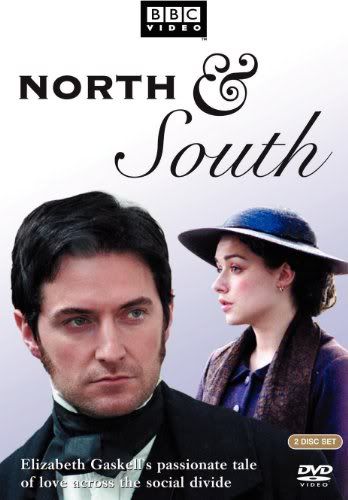
BBC's re-telling of Elizabeth Gaskell's novel is gorgeous as it is depressing. I haven't actually read any of Gaskell's work to compare how this adaptation translates, but I must say, if this isn't one of the most passionate stories of repressed emotion in times of hardship and distress, I don't know what is. Think of this film as 'Pride and Prejudice' only more realistic and much more depressing.


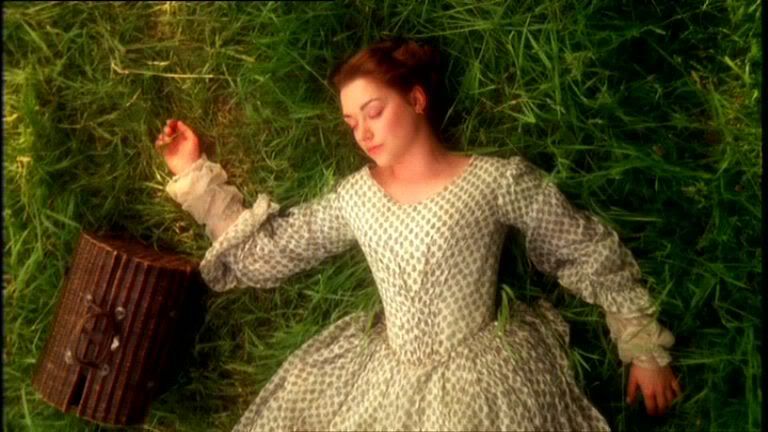
Enjoy it while you can, love.

Margaret Hale (a lovely Daniella Denby-Ashe) is a dreamer from the idyllic south region of England who values her freedom as well as her right to speak as well as her good manners. When her father decides to pick up sticks and head for the heavily industrial north, all of the colour and love is sapped from her world and replaced by smog, cotton mills and poverty. Things don't get any better when she meets the proprieter of the local mill, a dark, brtual man by the name of John Thornton (Richard Armitage in his break out role), as he's beating the crap out of a factory worker.


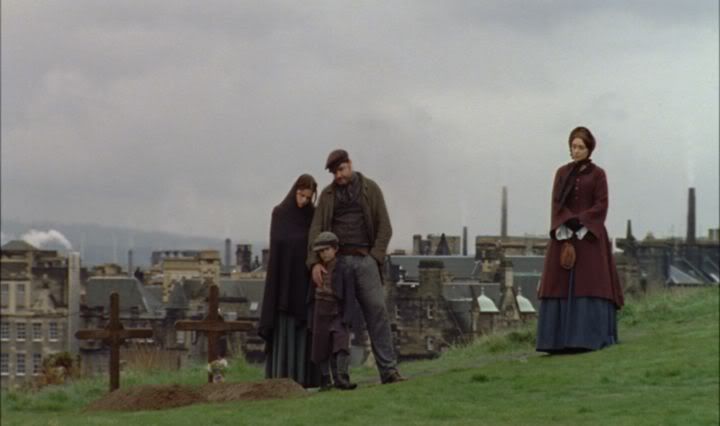
                                            It doesn't help the mill is next to THIS lovely place...

Margaret and her mother don't share Mr. Hale's enthusiasim for the culture of the north, and how could they? All it is is work, death and an absolute dirge of society where the only place fully open to the public is the cemetary. When Thornton strikes up a casual friendship with Mr. Hale, Margaret is forced into closer proximity with Thornton, a prospect that frightens yet intrigues her. At the same time, as she is gradually getting used to the north's oppressive atmosphere, she becomes friends with several of the mill workers, all of whom have a different opinion of Thornton... which of course gives Margaret second thoughts about the brute's character...


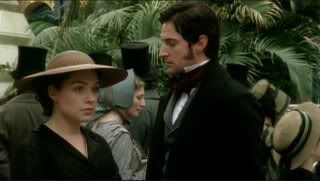
                                     You wouldn't know it, but they secretly wanna make babies

I think one of the many reasons why I loved this miniseries so much is that it doesn't travel the road most walked. I mean, this tale is set during the Industrial Era- people were working, but due to the poor conditions that many places had, they weren't working very well. This was also the beginning of forming unions, worker's rights and trying to form a better working environment, something that not all business owners wanted. What I also loved was that the two leads are not like Elizabeth Bennett or Fitzwilliam Darcy, they are more like real people in a real environment who feel real emotions, and it doesn't shy away from the fact that the consequences of every action they make has consequences. The only 'soft' sequences take place in Margaret's beloved south, but it is truly the north that draws you in. However, there is an almost epic love story here that will not make you roll your eyes. Although it is not in your face, there is a passion between them, that were it not for the fact they are worlds and manners apart to begin with, they would act on in an instant. This passion is repressed, but boy is it ever there. You want these two to end up together despite the fact each thinks the other is a fool when they first meet. And if you have seen this or read the book, you know it happens, but not without some serious screw ups along the way.


                                                            How could you blame him?

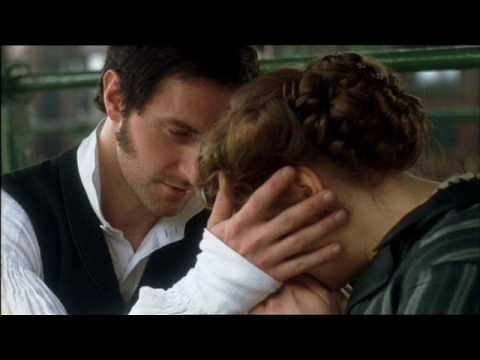
Naturally, we need human anchors in a production like this to make this love story work. Denby-Ashe and Armitage are more than up to the challenge. Margaret essentially is us, the audience, and we see what she sees, and what she sees influences what we think. When she first sees Thornton beating that hapless worker, like her, we think he is some coarse creature, and as Margaret gets to know him, even if at first it is not volunatrily, as do we. Every scene they are in, they command, if not share with each other and their co-actors, and you feel you are seeing these people, not actors wearing wonderful costumes. For every sequence of the depressing state of affairs in the north, we are treated to ones of tenderness and sensitivity that are almost impossible to resist.


                                                                           Like this.

For those romanatics who are looking for another period romance to add to their collection, this may not be for you if you are all about dancing, gentility and light humour. If you are expecting something like this in 'North and South', you would be sorely mistaken (not to mention very misguided if you think every Victorian story has that stuff). This is one for romantics who don't mind that stuff, but are more realistic in their expectations. These are romantics who know that with with great passion comes great consequence, and 'North and South' fits that bill in spades. It hurts, but it hurts so good.